
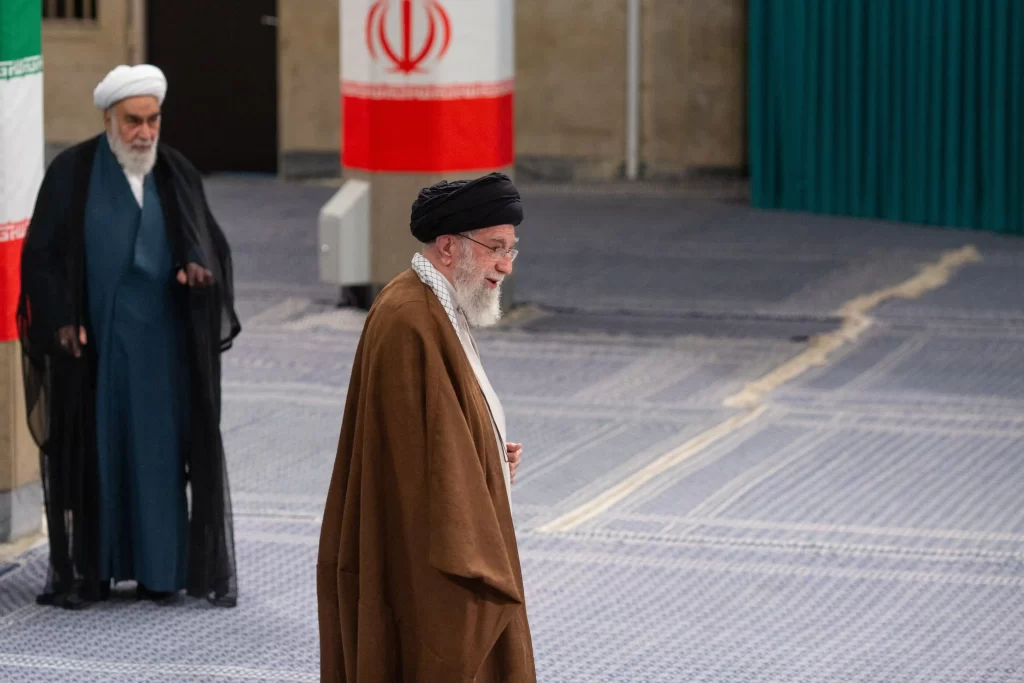
Iran’s supreme leader, Ayatollah Ali Khamenei, on Wednesday rejected President Trump’s call for Iran’s “unconditional surrender” and vowed to “stand firm” in the face of what he called Israeli aggression.
Mr. Trump’s remarks on Tuesday, in which he raised the possibility of killing Ayatollah Khamenei and referred to Israel’s war efforts with the word “we,” came amid mounting signs that the United States was considering joining Israel’s bombing campaign against the country.
“Intelligent people who know Iran, the nation and the history of Iran will never speak to this nation in the language of threats, because the Iranian nation cannot be surrendered,” Ayatollah Khamenei said in a televised statement on Wednesday, according to Iranian state media. “The Americans should know that any U.S. military intervention will undoubtedly be accompanied by irreparable damage.”
The statement on the sixth day of the war came just hours after Israel said it launched a fresh wave of strikes on the Iranian capital.
Overnight, the ayatollah had issued a defiant call to arms, saying in a post on social media that “the battle begins.”
In a post on Truth Social on Tuesday, Mr. Trump said that the United States knew where Ayatollah Khamenei was “hiding,” and said that its forces do not plan to kill him for now. Prime Minister Benjamin Netanyahu of Israel has also spoken in recent days of a potential strike on the Iranian leader.
Ayatollah Khamenei, who has led Iran for more than three decades and is at the heart of Iran’s hard-line foreign policy, did not directly address the threats against his life in his statement or on social media.
He has played a key role in positioning Iran as a counterweight to American, Israeli and Saudi influence across the Middle East. Ayatollah Khamenei has also consolidated control of Iran’s political, military and security apparatus, and crushed dissent to shore up his position as the country’s ultimate decision maker.