
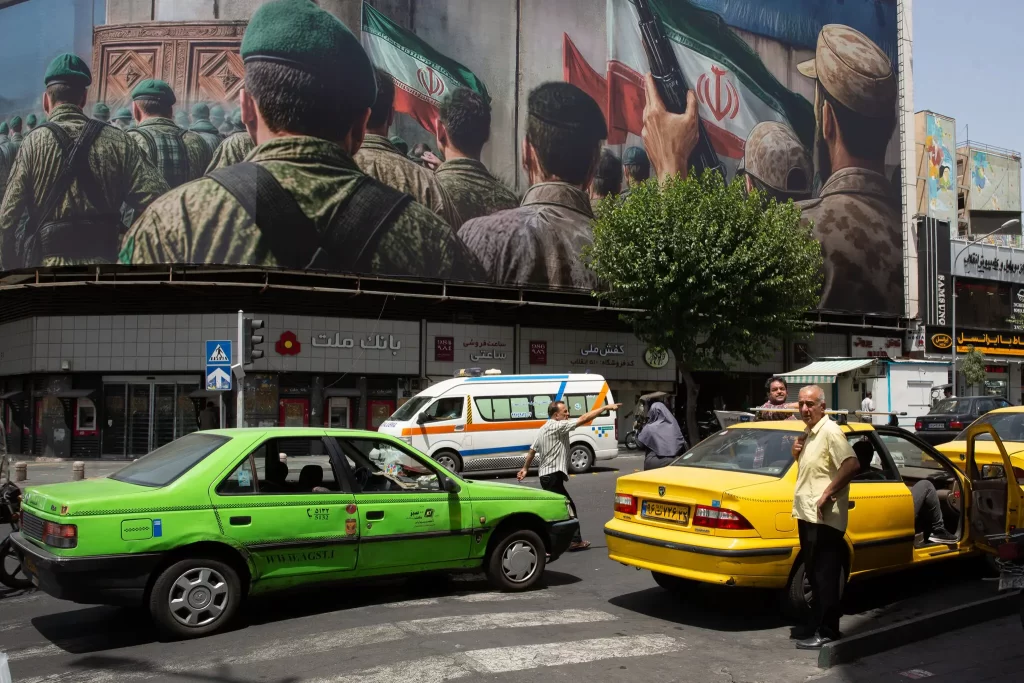
Officials in Iran were claiming victory, saying that its armed forces had imposed a truce on Israel. But defeat seemed a more accurate reading of recent events.
To hear the Iranian establishment tell it on Tuesday morning, the Islamic Republic had just pulled off a spectacular feat: launching an attack so crushing that the country’s mighty enemies, Israel and the United States, had been forced to submit.
“Defeat of the Zionist enemy,” ran the chyron on Iran’s state TV network on Tuesday morning as it broadcast news that Israel and Iran had agreed to a cease-fire. State news agencies published a fanfare-laden statement by the Iranian national security council saying that Tehran and the “dazzling power” of its military were “imposing a cease-fire” on Israel by striking a U.S. air base in Qatar and other targets. By evening, state TV was broadcasting images of a victory rally in Tehran.
But defeat seemed a more accurate reading of recent events — not just defeat, but the kind of battering that leaves a question mark hanging over the future of Iran’s nearly half-century-old theocratic regime.
The 12-day war began with a barrage of Israeli airstrikes on Iran that wiped out much of the Iranian military’s top brass, destroyed its air defenses and degraded some of its nuclear and missile facilities. Subsequent Israeli attacks killed at least 600 Iranians, including children, according to Iranian authorities, and clogged the roads out of Tehran with panicked, fleeing civilians. And American airstrikes on three Iranian nuclear sites damaged, or may have destroyed, key parts of the country’s nuclear program, a longstanding symbol for the ruling establishment of strength and resistance to Western pressure.
Attacks of such breadth and depth on Iranian soil were possible because Iran had already suffered a series of blows, failures and missteps over the last 20 months: The crumpling of Hezbollah and Hamas, two of its main militia partners in the Middle East. The fall of the Assad regime in Syria. The crippling of Iranian air defenses in previous tit-for-tat military exchanges with Israel.
To read more, click on the link below:
https://www.nytimes.com/2025/06/24/world/middleeast/iran-israel-reaction.html