
Israel and Iran traded intensive fire for the eighth consecutive day on Friday, with Iranian missiles striking Israeli cities and Israeli jets pounding targets across Iran, despite diplomatic efforts to contain the conflict.
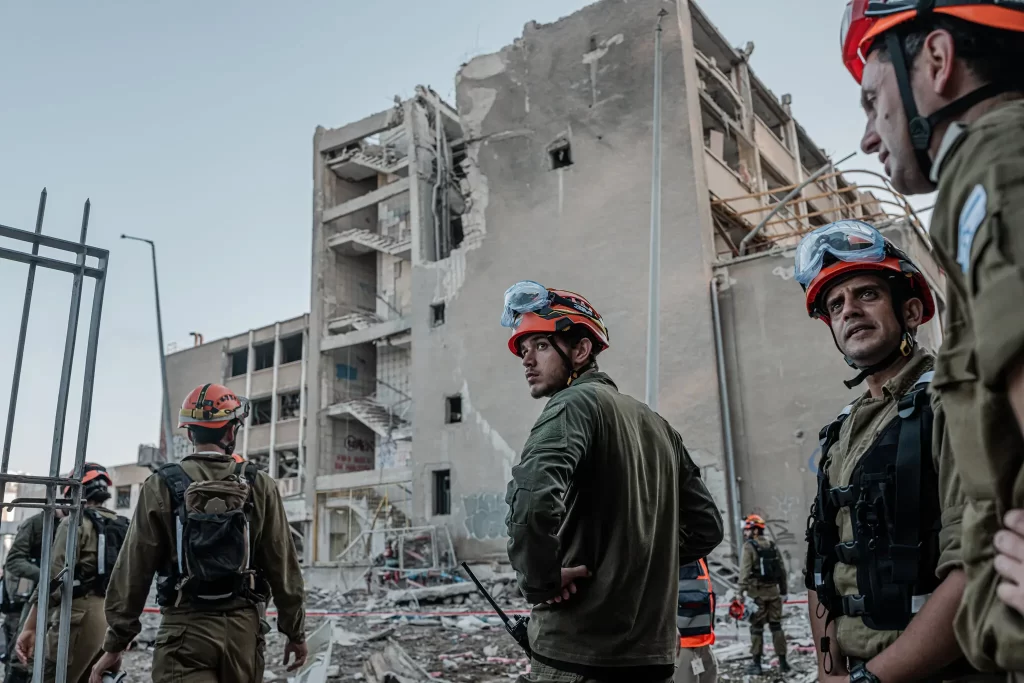
A missile launched from Iran early Friday morning damaged several buildings in the southern Israeli city of Beersheba, where a strike the day before had hit a major medical center that had been largely evacuated. About nine hours later, a missile from a volley of some 35 struck an abandoned building in downtown Haifa, Israel’s third-largest city, causing extensive damage to surrounding buildings, including a mosque.
There were no direct fatalities from the strikes on Friday in Israel, though 23 people were wounded in Haifa, according to Magen David Adom, Israel’s national emergency service, and dozens more in strikes across the country. A woman died after she had a heart attack in a shelter in northern Israel while sirens warning of incoming missiles were blaring, the service said.
In the Iranian capital, Tehran, large crowds took to the streets for a prayer march in support of the Iranian regime, while a resident interviewed by The Times described thinning traffic and closed shops amid ongoing Israeli strikes.
Iranian government websites remained inaccessible from outside the country on Friday and had not been updated, making it impossible to confirm the number of casualties there. The communication blackout was part of a countrywide internet shutdown now in its fourth day.
The Israeli military said air force jets had struck military and nuclear sites in Tehran overnight. Iran’s state broadcaster reported early Friday morning that Israeli strikes had targeted an industrial complex in the Sefid-Rud area in the northern provinces along the Caspian Sea coast, and large blasts were also reported in the northern city of Rasht and north of Tehran.
Later on Friday, the Israeli military said it had struck missile storage and launch sites in the regions of Tabriz and Kermanshah, as well as surface-to-air missile batteries in southwestern Iran. Israel’s defense minister, Israel Katz, said on Thursday that he had ordered the military to increase attacks on Iranian government targets to “destabilize the regime.”
The exchanges continued even as Iran’s top diplomat was meeting on Friday in Geneva with European foreign ministers for talks aimed at reaching a diplomatic compromise. The talks broke up without any evident breakthrough.
The talks followed President Trump’s announcement Thursday that he would delay a decision on whether to join Israel’s attacks, saying he would make up his mind “within the next two weeks.”