
President Trump has said there is little he could do to stop the Israeli attacks. A European diplomatic effort to rein in the hostilities ended without a breakthrough on Friday.
The conflict between Israel and Iran entered its ninth day on Saturday after a European diplomatic effort — dismissed by President Trump — saw little immediate progress in preventing the exchanges of fire from spiraling into a broader war.
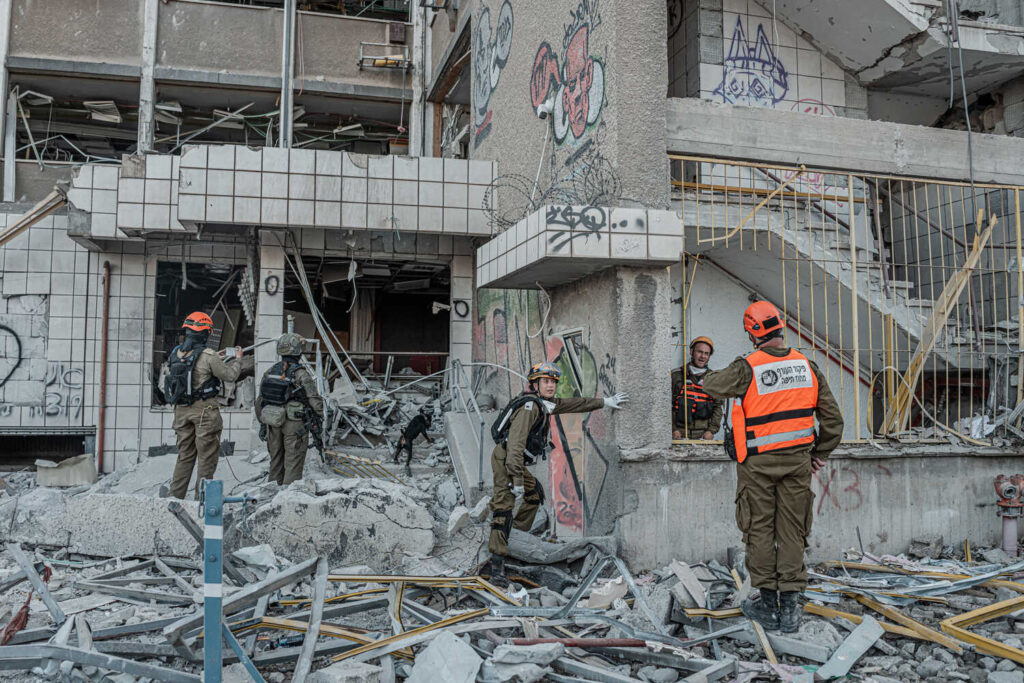
Early Saturday morning, Iran sent a barrage of missiles toward Israel, setting off air-raid sirens throughout the country’s densely populated heartland. The alerts ordered millions of Israelis to enter fortified shelters, but there were no reports of casualties.
The Israeli military said it had launched a wave of airstrikes on Saturday against Iranian missile sites. The attacks’ full toll remained unclear, but Iranian media close to the country’s Revolutionary Guards reported that a teenager had been killed in the central city of Qom.
On Friday, talks between the representatives of Iran and Europe ended with no signs of a breakthrough. The foreign ministers of Britain, France and Germany, along with the European Union’s top diplomat, held three hours of talks in Geneva with Iran’s foreign minister, and emphasized the need for more discussions.
The European effort aims to offer a diplomatic off-ramp for Iran, forestalling a decision by Mr. Trump to thrust the United States into the war. On Friday, Mr. Trump told reporters, “Iran didn’t want to speak to Europe, they want to speak to us.”
A day after backing away from threats that raised the specter of an imminent U.S. strike and creating a two-week window for diplomacy, Mr. Trump said he still hoped to be a peacemaker. But he suggested that only direct talks between the United States and Iran would produce a way out of the war. “Europe,” he said, “is not going to be able to help.”
He also implied there was little he could do to get Israel to rein in its bombing campaign. “Israel is doing well in terms of war, and I think you would have to say Iran is doing less well,” he said. “It’s a little hard to get someone to stop.”
Mr. Trump has said he will decide within the next two weeks whether to attack Iran. Israel hopes the United States will join the assault — particularly in attacking Fordo, an Iranian nuclear site buried deep in a mountain. Only Washington possesses the 30,000-pound bomb many consider essential to an air assault on the complex.
The Europeans urged Iran to resume direct nuclear talks with the United States. Iran’s top diplomat, Abbas Araghchi, said Iran would consider fully re-engaging in diplomacy only “once the aggressor was held accountable for the crimes committed,” suggesting the negotiations were unlikely to move ahead unless Israel ceased its offensive.
Here is what else to know:
- Street protests: Tens of thousands of people poured into the streets in Iran, Iraq and Lebanon after midday prayers on Friday to vent their anger over the Israeli attacks. In Tehran, people trampled or burned American and Israeli flags, video from the scenes showed.
- What’s next? If Mr. Trump decides to send American bombers to help Israel destroy a uranium enrichment facility in Iran, it will most likely initiate a more dangerous phase in the war. Here are some ways that could play out, and a look at how the U.S. military’s powerful bunker-busting bombs work.